
- AI Healthcare
- Clinical Intelligence Platform
- Healthcare AI
3 min. read
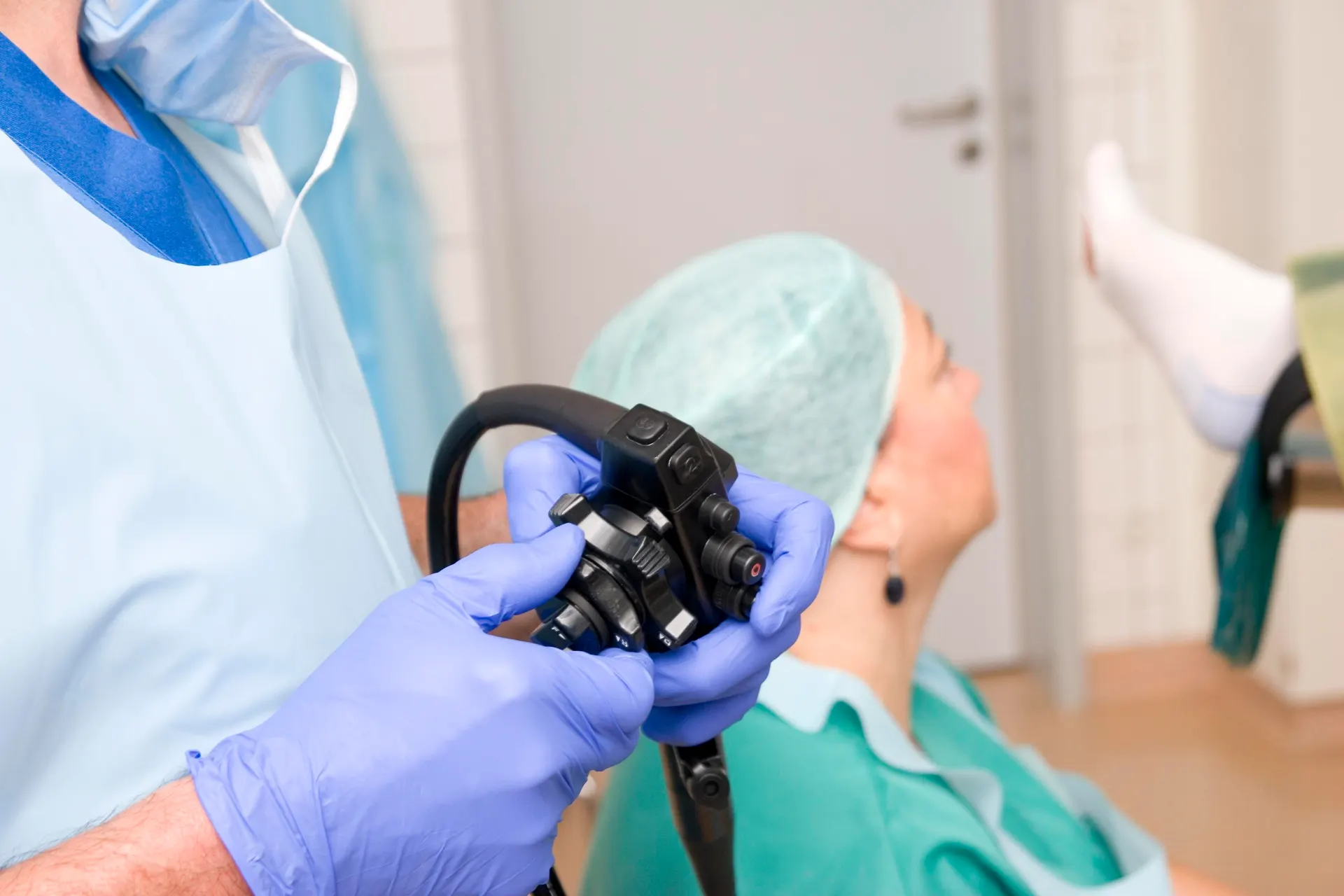
In a modern colonoscopy, a camera moves through the intestine while an endoscopist watches the feed for suspicious growths. In late 2021, four Polish endoscopy centers switched on AI software that watched the same feed and flagged anything suspicious. A few months later, the doctors had gotten worse at finding polyps on their own.
That finding traveled fast. The headline everywhere was simple: AI is making doctors worse.
Matic founder Dr. Alex Sheppert, DO, PhD, MBA, doesn’t dispute the result. In a new Forbes Technology Council article, he makes the opposite case: the finding is real, and it’s not the problem people think it is.
Sheppert’s starting point is straightforward. Months of leaning on software mean less manual practice, and unused skills get rusty. Almost nobody can recite a phone number now that contact lists do it for them. Take away the backup camera, and most drivers struggle to parallel park.
None of that is controversial. The question is what it means.
Sheppert reframes the debate around a single question: would you want the AI running during your own colonoscopy?
The data answers it. Across 44 randomized trials and more than 36,000 patients, AI assistance raised adenoma detection from 36.7% of exams to 44.7%. That’s roughly one-fifth more patients getting a precancerous growth caught before it becomes cancer.
Measuring how sharp a doctor is with the software switched off, Sheppert argues, is measuring the wrong thing. The relevant number is how many precancerous growths get found with the tool running.
Endoscopy has already retired manual technique more than once. Before the colonoscope, doctors performed rigid sigmoidoscopy: a straight tube, lit by candlelight or a mirror in the early days. Around 1970, flexible fiber-optic scopes replaced it. Then came the camera and screen.
Each transition made the prior skill obsolete. Doctors who moved to flexible scopes had no reason to keep their rigid-tube technique sharp. Nobody today mourns that lost craft, because the exam kept getting better at doing its job.
Sheppert traces the anxiety back to Plato’s Phaedrus, where the Egyptian king Thamus warns that writing will destroy human memory. He was right: almost nobody holds an epic poem in their head the way a Homeric reciter once did. Nobody mourns that either. Literacy turned out to be more accurate and more convenient than the memory it replaced.
Sheppert’s answer is deliberately unglamorous: redundancy, maintenance, and a vendor accountable for uptime, the same way fragile software is handled everywhere else in medicine. Not a workforce kept artificially sharp at a method the data already shows is worse.
Chess went through the same argument a generation ago. When engines surpassed grandmasters, critics warned that players trained on computer analysis would never develop real board vision. The engine-raised generation became some of the strongest players in the game’s history.
Sheppert’s conclusion: the skill worth building now isn’t the old manual craft. It’s the process of working with the machine. Whatever your field, some part of it is becoming the rigid sigmoidoscope: a skill you were proud of that a better tool has made unnecessary. The trade is coming either way. He argues you should take it.
Read the full Forbes Technology Council article: AI Deskilling Is Real: Don’t Let That Stop You