- Connected Care
- Healthcare AI
- Physician Burnout
- Clinical Workflow Automation
3 min. read
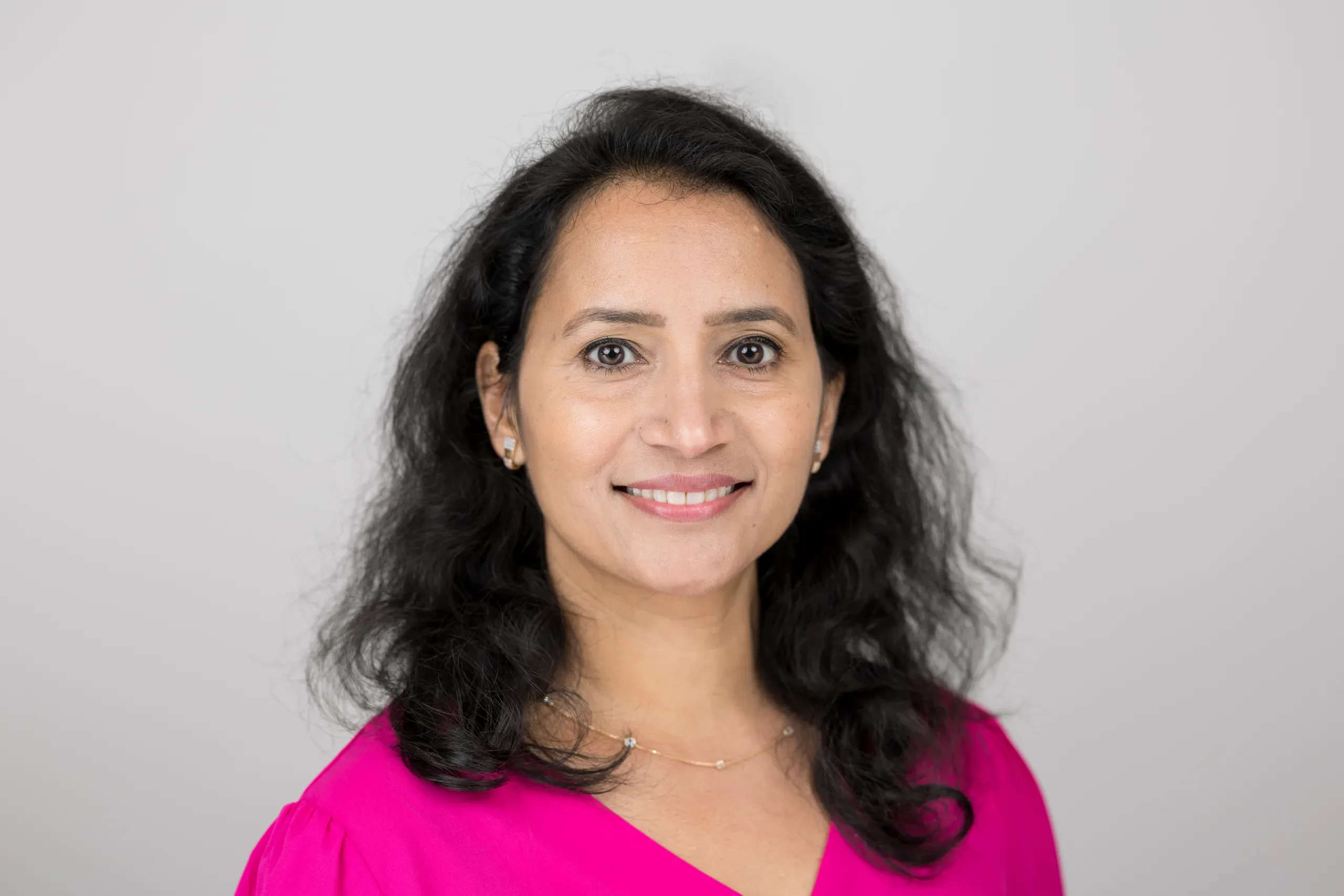
How one family physician got her eye contact back.
Dr. Ampajwala has spent 18 years with Catalyst Physician Group. She trained at the Dartmouth Concord Family Medicine residency program, and somewhere in those early years, she found the thing that would define her career: patients she’d know for decades. Their families. Their kids. Eventually, in some cases, their grandkids.
“I do believe in knowing my patients over time,” she says. “Not only patients, but their families and their hardships and learning about their life.” That’s the whole job, as she sees it, not fixing one problem and moving on, but walking with patients through the complicated, unglamorous work of staying healthy across a lifetime.
As her career has progressed, technology has increasingly become a barrier, not a solution.
“The hardest part of the day is not the medicine,” she says. “It’s about the noise around the patient care.” The clicks. The screens. The constant awareness, in the back of her mind, of the next patient waiting, the next box to check, the next note that had to be finished before she could go home.
She put it more precisely than almost anyone we’ve heard describe it: it’s ironic how the evolution of medicine has pushed patient care behind the screen, even though human connection is the whole point. A computer that was built to help her sits between her and the person she was supposed to be helping.
That tension didn’t stay in the exam room. It followed her home. Nights spent re-checking charts, double-checking codes, making sure nothing had slipped, not because the work demanded it in the moment, but because the fear of falling behind never fully turned off. Ask any physician what “pajama time” costs them, and you’ll get some version of Dr. Ampajwala’s answer: a background hum of anxiety and work that doesn’t end at 5 p.m.
Here’s what actually changed it. Dr. Ampajwala uses Matic, a clinical intelligence ecosystem built with Catalyst physicians, and the shift for her started with something almost mechanical: before a visit, Matic builds a full review from the entire patient history, labs, medications, care gaps, suspected diagnoses, screenings, trends, and risk factors, so she starts her day fully prepared. During the visit, Matic captures the conversation in real time and provides evidence-based and fully-cited contextual clinical decision support. What used to require her attention, typing while trying to listen, glancing at the screen instead of the patient, now happens quietly in the background.
The difference isn’t that the work disappeared. It’s that it stopped needing to sit between her and the patient. She can look up from the chart, hold eye contact, and stay in the conversation, because the documentation is no longer something she has to build in real time while also trying to be present.
This is the story underneath almost every conversation happening in primary care right now. Not a story about technology, but a story about attention.
Dr. Ampajwala didn’t choose primary care to become a data-entry specialist. She chose it because she wanted to know people. The measure of whether a tool like Matic is working isn’t whether it’s fast or clever. It’s whether, at the end of the visit, the doctor and the patient both feel like they were actually in the room together.
That’s the bar. And for Dr. Ampajwala, getting the screen out of the way is what let her clear it.
Curious what a visit looks like without a screen in the way? Discovery Matic.